
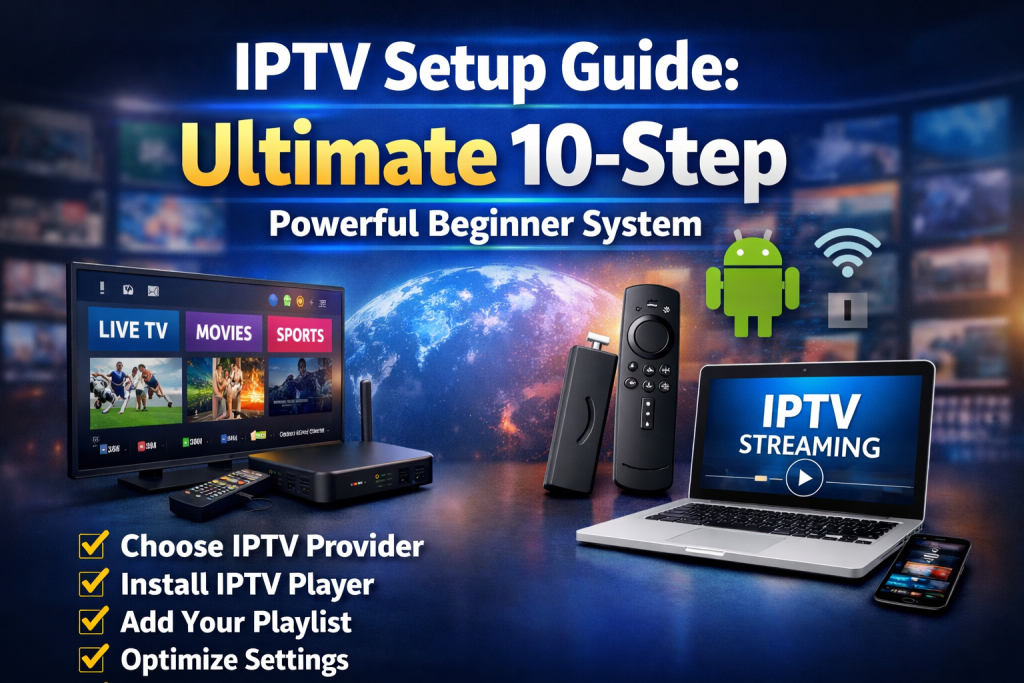
IPTV setup guide that explains the easiest and most powerful steps to install, configure, and start streaming IPTV on any device quickly and safely.
Introduction to IPTV
The demand for online television streaming continues to grow worldwide. More people are replacing traditional cable subscriptions with internet-based services. That’s where this IPTV setup guide becomes useful.
IPTV, which stands for Internet Protocol Television, allows users to stream live television and on-demand content through the internet instead of traditional satellite or cable systems. This technology offers greater flexibility, lower costs, and access to thousands of channels worldwide.
If you are new to IPTV, setting it up might seem confusing at first. However, the process is actually straightforward once you understand the basics. With the right device, a stable internet connection, and a reliable IPTV provider, you can start streaming in just a few minutes.
This IPTV setup guide will walk you through everything you need to know. From understanding how IPTV works to installing it on popular devices, you’ll learn every step required to enjoy high-quality streaming.
By the end of this guide, you’ll be able to configure IPTV on smart TVs, streaming devices, and smartphones without technical difficulties.
What Is IPTV and How Does It Work?
Internet Protocol Television is a system that delivers television content using internet protocols rather than traditional broadcast formats. Instead of receiving signals from satellites or cable networks, IPTV sends media through broadband connections.
In simple terms, IPTV works similarly to streaming platforms like Netflix or YouTube. When you select a channel or video, the system sends the content directly to your device through the internet.
Traditional TV vs IPTV
Understanding the difference between IPTV and traditional television helps clarify why many viewers are switching.
| Feature | Traditional TV | IPTV |
|---|---|---|
| Delivery Method | Satellite or cable | Internet connection |
| Device Compatibility | Limited | Multiple devices |
| Content Flexibility | Fixed schedule | On-demand viewing |
| Cost | Often expensive | Usually cheaper |
With IPTV, viewers can watch programs whenever they want rather than waiting for scheduled broadcasts.
Types of IPTV Services
There are three main IPTV formats commonly used by providers.
1. Live Television
This allows users to watch TV channels in real time, similar to cable TV.
2. Video on Demand (VOD)
Users can choose movies or shows from a library and watch them anytime.
3. Time-Shifted Media
This feature allows viewers to replay shows they missed earlier.
These options give IPTV a major advantage over traditional television systems.
Why IPTV Is Becoming So Popular
The rapid growth of IPTV services isn’t surprising. Many viewers prefer the flexibility and affordability it provides.
Cost Benefits
Cable television packages can be expensive, especially when bundled with unnecessary channels. IPTV services often offer more channels at lower prices.
Many providers also offer free trials, allowing users to test the service before committing to a subscription.
Device Flexibility
Another major benefit is compatibility. IPTV can work on various devices including:
- Smart TVs
- Android boxes
- Streaming sticks
- Smartphones
- Tablets
- Computers
This means you can watch your favorite content anywhere with an internet connection.
Because of these advantages, more households are switching to IPTV every year.
Devices Compatible With IPTV
A good IPTV setup guide must include information about compatible devices. Fortunately, IPTV works on many modern platforms.
Smart TVs
Most smart televisions support IPTV applications.
Popular compatible brands include:
- Samsung Smart TV
- LG Smart TV
- Android TV systems
Users simply install an IPTV player from the app store and enter their subscription details.
Streaming Devices
Streaming devices are among the most popular options for IPTV users.
Examples include:
- Amazon Firestick
- Apple TV
- Android TV boxes
- Roku devices
These devices are affordable and easy to configure.
Smartphones and Tablets
IPTV apps are also available for mobile devices.
Both Android and iOS platforms support IPTV players that allow users to stream channels directly on their phones.
This flexibility makes IPTV ideal for watching content while traveling or commuting.
IPTV Setup Guide for Beginners
If you’re completely new to IPTV, don’t worry. This IPTV setup guide breaks the process down into simple steps.
Requirements Before Starting
Before installing IPTV, make sure you have the following:
- A stable internet connection (minimum 15 Mbps recommended)
- A compatible device
- An IPTV subscription
- An IPTV player application
Once these are ready, the setup process becomes much easier.
Choosing an IPTV Player
An IPTV player is an application that plays your IPTV channels.
Some popular IPTV players include:
- IPTV Smarters
- TiviMate
- Smart IPTV
- GSE Smart IPTV
These apps allow users to enter M3U playlists or Xtream Codes provided by their IPTV service.
IPTV Setup Guide for Firestick
Firestick is one of the most popular streaming devices for IPTV users. Follow these steps to install IPTV on it.
Step 1: Enable Apps From Unknown Sources
- Go to Settings
- Select My Fire TV
- Choose Developer Options
- Enable Apps from Unknown Sources
Step 2: Install Downloader App
Search for the Downloader app in the Amazon store and install it.
Step 3: Download IPTV Player
Open Downloader and enter the download link for your IPTV player.
Step 4: Install the App
Once downloaded, install the application and open it.
Step 5: Enter IPTV Credentials
Enter your IPTV login details such as:
- M3U playlist URL
- Xtream Codes login
After completing these steps, channels will load automatically.
IPTV Setup Guide for Smart TVs
Setting up IPTV on smart TVs is often easier because apps can be downloaded directly from the TV store.
Steps
- Open the TV App Store
- Search for an IPTV player
- Install the application
- Open the app
- Enter IPTV playlist details
Within minutes, your IPTV channels will appear on the screen.
Some TVs may require MAC address activation depending on the IPTV application used.
IPTV Setup Guide for Android Devices
Android devices provide the most flexibility for IPTV installations.
Installation Steps
- Open Google Play Store
- Search for an IPTV player
- Install the application
- Open the app
- Add your playlist or login credentials
Many Android IPTV players also support advanced features such as recording and electronic program guides.
Best IPTV Apps for Streaming
Choosing the right IPTV application can improve your viewing experience significantly.
Here are some widely used IPTV apps:
| App | Platform | Features |
|---|---|---|
| IPTV Smarters | Android, iOS, Firestick | User-friendly interface |
| TiviMate | Android TV | Advanced channel management |
| Smart IPTV | Smart TVs | Easy playlist integration |
| GSE Smart IPTV | iOS, Android | Multiple format support |
You can learn more about IPTV technology from this helpful resource:
https://www.cloudflare.com/learning/video/what-is-iptv/
Common IPTV Setup Problems and Fixes
Even the best IPTV setup guide must address common issues.
Buffering Problems
Buffering is usually caused by slow internet connections.
Solutions include:
- Upgrading internet speed
- Using a wired connection
- Restarting the router
Channels Not Loading
If channels fail to load, check:
- IPTV login credentials
- Playlist URL
- App updates
App Crashes
Try these fixes:
- Clear cache
- Reinstall the application
- Update device software
Most problems can be solved with simple troubleshooting.
Security and Legal Considerations
While IPTV is a legitimate technology, not all IPTV providers operate legally.
To stay safe:
- Choose reputable providers
- Avoid suspicious services
- Protect your personal information
Using a secure internet connection also helps protect your data while streaming.
Tips for the Best IPTV Streaming Experience
To get the best results from your IPTV service, follow these tips.
Improve Internet Speed
A faster connection reduces buffering and improves video quality.
Use Ethernet Instead of WiFi
Wired connections are usually more stable.
Choose Reliable IPTV Providers
Reliable providers maintain stable servers and high-quality streams.
Keep Apps Updated
Regular updates fix bugs and improve performance.
By following this IPTV setup guide, you can enjoy smooth and reliable streaming on almost any device.
Frequently Asked Questions
1. What internet speed is required for IPTV?
A minimum of 15 Mbps is recommended for HD streaming, while 25 Mbps or more works best for 4K content.
2. Can IPTV work on multiple devices?
Yes. Many IPTV services allow users to stream on multiple devices depending on the subscription plan.
3. Do I need a VPN for IPTV?
Some users choose to use a VPN for privacy and security, although it depends on the provider and region.
4. Is IPTV better than cable TV?
IPTV often offers more flexibility, lower prices, and on-demand content compared to traditional cable services.
5. Can I record IPTV shows?
Some IPTV apps support recording features, especially on Android TV devices.
6. Why is IPTV buffering?
Buffering usually occurs due to slow internet speeds, server congestion, or unstable WiFi connections.
Conclusion
IPTV has transformed the way people watch television. Instead of relying on traditional cable systems, viewers can now stream thousands of channels through the internet.
This IPTV setup guide showed you how IPTV works, the devices that support it, and the step-by-step process for installing IPTV on Firestick, smart TVs, and Android devices.
Once the setup is complete, users can enjoy live television, movies, sports, and on-demand content anytime they want.
With the right device and a reliable IPTV provider, streaming becomes simple, affordable, and incredibly convenient.