
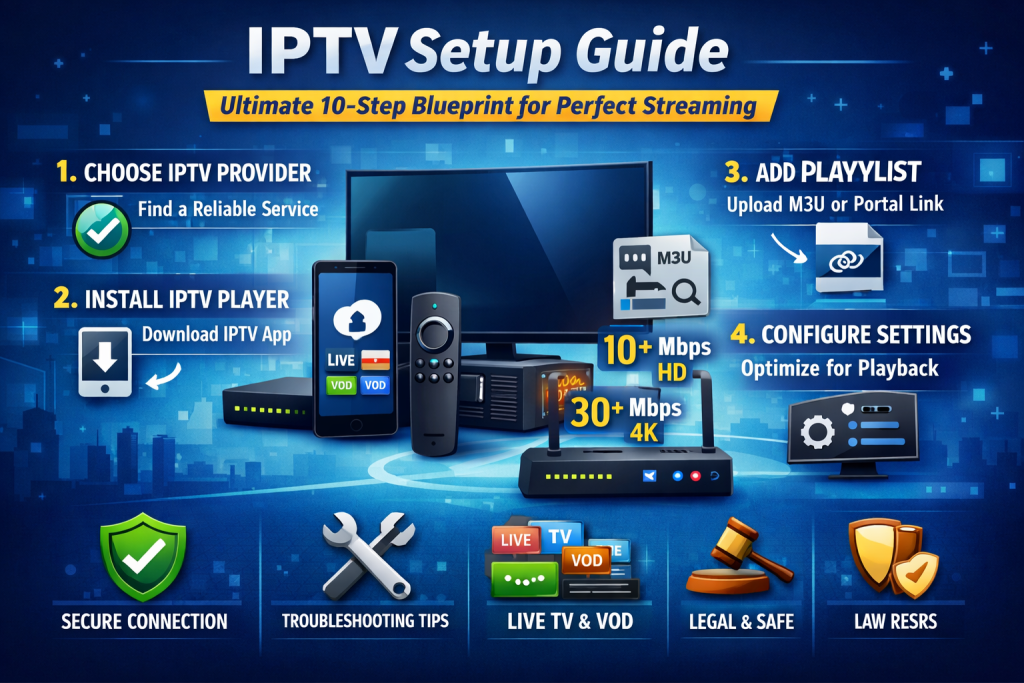
IPTV setup guide for beginners – learn the ultimate 10-step blueprint to install, configure, and optimize IPTV on any device for smooth streaming.
Introduction to IPTV Setup Guide
Streaming television has changed dramatically over the past decade. Instead of relying on satellite dishes or cable subscriptions, many viewers now watch TV using internet-based platforms. That’s where an IPTV setup guide becomes essential. IPTV, short for Internet Protocol Television, allows users to stream live channels, movies, and shows through an internet connection rather than traditional broadcasting methods.
An IPTV setup guide helps beginners install and configure IPTV services correctly. Without proper setup, users might experience buffering, poor quality streams, or missing channels. However, once configured correctly, IPTV delivers an impressive viewing experience with thousands of channels and on-demand content available instantly.
In today’s digital world, convenience is king. IPTV gives users the flexibility to watch their favorite content on Smart TVs, streaming devices, computers, and smartphones. Even better, IPTV subscriptions often cost significantly less than traditional cable packages. That’s why the popularity of IPTV keeps growing worldwide.
Another reason people search for an IPTV setup guide is the variety of apps and devices available. From Android TV boxes to Amazon Firestick and mobile devices, IPTV works across multiple platforms. Yet each platform may require slightly different steps to configure.
Throughout this guide, you’ll discover everything you need to know—from choosing the right provider to optimizing your device for the best streaming performance. By the end, you’ll have a clear understanding of how to install and configure IPTV easily.
If you’re completely new to IPTV, don’t worry. This guide uses simple explanations and practical steps that anyone can follow.
Understanding IPTV Technology
Before diving deeper into the IPTV setup guide, it helps to understand how IPTV technology actually works. Unlike traditional television broadcasting methods such as cable or satellite, IPTV delivers content through internet protocol networks.
Essentially, IPTV streams digital television signals through the same internet connection you use for browsing websites or watching videos online. Instead of receiving a signal through antennas or cables, your device downloads video data in real time.
IPTV vs Traditional Cable
Traditional cable television relies on dedicated infrastructure and scheduled broadcasting. Channels are transmitted continuously, and viewers must tune in at specific times.
IPTV, on the other hand, operates more like streaming platforms. Content is delivered when requested. This allows users to watch programs on demand, pause live TV, or replay shows whenever they want.
Here’s a quick comparison:
| Feature | IPTV | Cable TV |
|---|---|---|
| Delivery Method | Internet Protocol | Coaxial Cable |
| Content Availability | On-demand + Live | Mostly Live |
| Device Compatibility | Multiple devices | TV only |
| Cost | Usually lower | Often expensive |
| Flexibility | Very high | Limited |
Types of IPTV Services
Most IPTV services provide three main types of content.
Live Television
This is the most common feature. Users can watch live broadcasts of sports, news, entertainment, and international channels.
Video on Demand (VOD)
Similar to streaming platforms, IPTV services often include libraries of movies and TV series that can be played anytime.
Time-Shifted Media
This feature allows viewers to replay previously broadcast programs. If you miss a show, you can watch it later without recording.
These features make IPTV extremely appealing for modern audiences who want control over their viewing schedule.
For a deeper technical explanation of IPTV technology, you can read this overview from
https://www.cloudflare.com/learning/video/what-is-iptv/
Devices Compatible with IPTV
One of the best aspects of IPTV is its versatility. A well-configured IPTV setup guide works across a wide range of devices. That means you can enjoy streaming from your living room television or on the go using your smartphone.
Smart TVs
Modern Smart TVs often support IPTV apps directly. Brands like Samsung, LG, and Sony include app stores where users can download IPTV players. After installing the app, you simply add your IPTV playlist or login credentials.
Many IPTV users prefer Smart TVs because they provide a larger screen and smoother playback. Plus, the remote control makes navigation easy.
Streaming Devices
Streaming devices are another popular option for IPTV.
Common devices include:
- Amazon Firestick
- Android TV boxes
- Apple TV
- Chromecast with Google TV
These devices plug into your television’s HDMI port and transform it into a powerful streaming hub. Most IPTV setup guides recommend streaming devices because they support more apps and customization options.
Mobile Devices
IPTV also works perfectly on smartphones and tablets. Both Android and iOS devices support IPTV applications that allow users to stream content anywhere.
Benefits of IPTV on mobile devices include:
- Watching TV while traveling
- Casting content to larger screens
- Using cellular or Wi-Fi networks
Because of this flexibility, IPTV has become one of the most convenient entertainment solutions available today.
IPTV Setup Guide: Required Tools
Before following an IPTV setup guide, you’ll need a few essential tools. Preparing these items in advance ensures the installation process runs smoothly.
Internet Speed Requirements
Since IPTV relies entirely on internet connectivity, speed plays a crucial role. Slow connections often cause buffering or playback interruptions.
Recommended speeds:
| Streaming Quality | Minimum Speed |
|---|---|
| SD | 5 Mbps |
| HD | 10 Mbps |
| Full HD | 20 Mbps |
| 4K | 30 Mbps or higher |
For households with multiple users streaming simultaneously, higher speeds are recommended.
IPTV Apps
An IPTV player acts as the interface between your device and the IPTV server. These apps organize channels, display program guides, and manage streaming.
Popular IPTV players include:
- IPTV Smarters
- TiviMate
- Smart IPTV
- GSE Smart IPTV
These applications don’t provide channels themselves. Instead, they allow users to connect to IPTV subscriptions using M3U playlists or portal URLs.
Once you’ve installed an IPTV player and obtained login details from your provider, you’re ready to follow the setup process.
Step-by-Step IPTV Setup Guide
Now comes the most important section of this IPTV setup guide: the actual installation process. While the exact steps may vary slightly depending on your device, the overall process remains similar.
Step 1 – Choose an IPTV Provider
The first step is selecting a reliable IPTV provider. A good provider offers stable servers, high-quality streams, and a wide channel selection.
Key factors to consider:
- Channel availability
- Streaming quality
- Customer support
- Trial availability
- Server stability
Many providers offer free trials so users can test their service before committing.
Step 2 – Install IPTV Player
Next, install an IPTV player on your device.
Steps usually include:
- Open the device’s app store
- Search for an IPTV player
- Download and install the app
- Launch the application
Once installed, the app will request login details or a playlist link.
Step 3 – Add Playlist
Most IPTV services provide one of two connection methods:
M3U Playlist URL
A link containing channel lists and streaming data.
Xtream Codes API
Login credentials including username, password, and server URL.
After entering the details, the app loads channels and program guides automatically.
Step 4 – Configure Settings
Finally, adjust settings for optimal performance.
Recommended configurations include:
- Enable hardware decoding
- Adjust video buffer size
- Enable EPG (Electronic Program Guide)
- Sort channels by category
Once completed, your IPTV setup is ready for streaming.
IPTV Setup Guide for Popular Devices
Different devices require slightly different installation steps. Let’s look at some of the most popular platforms used for IPTV streaming.
Firestick Setup
Amazon Firestick is one of the most widely used IPTV devices.
Steps:
- Enable apps from unknown sources
- Install Downloader app
- Download IPTV player APK
- Install and launch the app
- Add IPTV credentials
Firestick provides excellent performance and portability, making it ideal for IPTV users.
Smart TV Setup
Setting up IPTV on Smart TVs is straightforward.
Typical process:
- Open the TV app store
- Search for IPTV player
- Install the application
- Enter playlist URL or login credentials
Once configured, channels will appear directly within the app interface.
Android & iOS Setup
Mobile device setup is extremely simple.
Steps include:
- Install IPTV player from Google Play or App Store
- Launch the app
- Add M3U playlist or Xtream login
- Start streaming
Mobile IPTV apps often include extra features like casting, recording, and parental controls.
Troubleshooting IPTV Issues
Even with a proper IPTV setup guide, occasional problems may occur. Fortunately, most IPTV issues are easy to fix.
Internet Optimization
Buffering usually indicates internet issues. To improve performance:
- Restart your router
- Use wired Ethernet connections
- Reduce network congestion
- Upgrade internet plan if needed
App Configuration Fixes
Sometimes problems originate from the IPTV player.
Possible solutions include:
- Clearing app cache
- Updating the app
- Reloading playlist
- Restarting the device
These quick fixes solve most streaming interruptions.
Security and Legal Considerations
When following an IPTV setup guide, users should also consider security and legality. Not all IPTV services operate under the same regulations.
To stay safe:
- Choose reputable providers
- Avoid suspicious free services
- Protect personal data
- Use secure connections
Privacy tools and secure networks help protect your streaming activity while maintaining reliable performance.
Frequently Asked Questions
1. What is the easiest IPTV setup guide for beginners?
The easiest IPTV setup involves installing an IPTV player, adding an M3U playlist from a provider, and configuring basic playback settings.
2. Do I need a Smart TV for IPTV?
No. IPTV works on many devices including smartphones, tablets, streaming boxes, and computers.
3. Why does IPTV buffering happen?
Buffering usually occurs due to slow internet speeds, server overload, or incorrect app settings.
4. Is IPTV better than cable TV?
Many users prefer IPTV because it offers more channels, on-demand content, and lower subscription costs.
5. What internet speed is required for IPTV?
At least 10 Mbps is recommended for HD streaming, while 30 Mbps or more works best for 4K content.
6. Can IPTV work on multiple devices?
Yes. Many IPTV providers allow multiple connections depending on the subscription plan.
Conclusion
Following a reliable IPTV setup guide makes the difference between frustrating buffering and smooth, high-quality streaming. With the right provider, compatible device, and properly configured IPTV player, you can access thousands of channels and on-demand content effortlessly.
The key steps include choosing a trusted IPTV provider, installing a compatible player, adding playlist credentials, and optimizing playback settings. Once completed, IPTV becomes one of the most flexible and affordable entertainment solutions available today.
Whether you’re using a Smart TV, Firestick, or smartphone, IPTV opens the door to unlimited viewing possibilities. With the guidance provided in this article, setting up IPTV should now feel simple, clear, and achievable.