
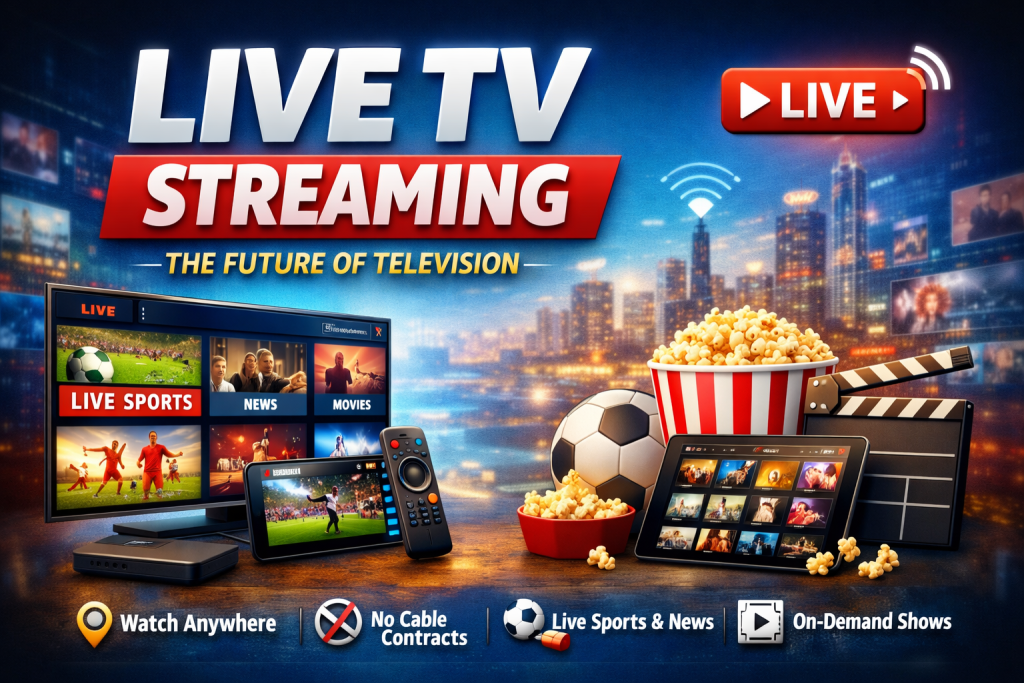
Live TV streaming allows you to watch television channels in real time over the internet instead of through traditional cable or satellite connections.
Think of it like this: cable TV sends signals through wires. Live TV streaming sends those same channels through the internet. Same shows. Same sports. Same news. Just delivered differently.
Instead of a cable box, you use apps.
Instead of contracts, you use subscriptions.
And instead of being tied to one TV, you can watch anywhere.
How Live TV Streaming Works
Internet-Based Broadcasting
At its core, live TV streaming uses your internet connection to deliver broadcast content directly to your device. Content providers encode live broadcasts into digital streams, which are then sent to users in real time.
It’s like water flowing through pipes — except the pipes are digital, and the water is video data.
Cloud Servers and Content Delivery Networks
Behind the scenes, powerful cloud servers store and distribute content. Content Delivery Networks (CDNs) ensure that streams reach viewers quickly and smoothly, reducing buffering and lag.
Without these networks, streaming would feel like watching a slideshow instead of a live event.
Role of Smart Devices
Smart TVs, streaming sticks, gaming consoles, smartphones, tablets — all of these devices can access live TV apps. The device simply connects to the internet and pulls the stream directly from the provider.
Simple. Clean. Efficient.
Traditional Cable vs Live TV Streaming
Let’s be honest — cable TV feels rigid now.
Cost Comparison
Cable packages often bundle dozens of channels you never watch. And you pay for all of them.
Live TV streaming services usually offer more flexible pricing tiers. Many plans are cheaper than traditional cable, and there’s no installation fee.
Flexibility and Contracts
Cable loves contracts. Streaming doesn’t.
Most live TV streaming services are month-to-month. Cancel anytime. No awkward phone calls required.
Channel Availability
Streaming platforms offer major networks, sports channels, and even premium add-ons. While some niche channels might be missing, most mainstream content is covered.
Top Live TV Streaming Services
Here are some of the most popular platforms leading the charge:
YouTube TV
YouTube TV offers a wide selection of channels, unlimited cloud DVR, and an easy-to-use interface. It’s often praised for reliability and sports coverage.
Hulu + Live TV
Hulu combines live TV with an extensive on-demand library. It’s like getting two services in one.
Sling TV
Sling TV is known for its budget-friendly packages. You can customize channel bundles based on your preferences.
FuboTV
FuboTV is especially popular among sports fans, offering a strong lineup of sports channels and international coverage.
Each service has strengths. The best one depends on what you watch most.
Benefits of Live TV Streaming
Why are millions cutting the cord?
No Long-Term Contracts
Freedom. That’s the big one. Subscribe when you want. Cancel when you don’t.
Multi-Device Access
Watch on your TV at home. Switch to your phone in the car. Continue on your laptop at a café.
It follows you.
On-Demand Add-Ons
Missed a show? Many services include DVR and on-demand libraries. Some even allow unlimited recordings.
Personalized Experience
Streaming platforms learn your preferences. The more you watch, the smarter the recommendations get.
It’s like having a TV that actually understands you.
Challenges of Live TV Streaming
It’s not perfect.
Internet Dependency
No internet? No TV.
A stable, high-speed connection is essential. Slow connections mean buffering — and nobody likes that spinning circle.
Data Usage
Streaming consumes data. A lot of it. If you have a limited data plan, keep an eye on usage.
Streaming Delays
Live streams can be slightly delayed compared to cable broadcasts. This matters most during live sports — especially if your neighbor’s cable cheers before you see the goal.
What You Need to Start Live TV Streaming
Ready to make the switch?
High-Speed Internet
Aim for at least 10–25 Mbps for smooth HD streaming.
Streaming Device or Smart TV
Smart TVs have built-in apps. Alternatively, devices like streaming sticks can transform any TV into a smart one.
Subscription Plan
Choose a service that fits your budget and channel preferences.
That’s it. No technician. No drilling holes. No waiting around.
Live Sports and Events Streaming
Sports fans were once hesitant to cut the cord. Not anymore.
Many streaming platforms offer extensive sports coverage, including live games, tournaments, and pay-per-view events.
However, blackout restrictions can still apply based on location.
If you’re in a sports-loving city like Fes or anywhere globally, access depends on your provider’s rights agreements.
Is Live TV Streaming Legal and Safe?
Yes — if you use legitimate services.
Stick to well-known providers and official apps. Avoid suspicious websites offering “free” premium channels. If it sounds too good to be true, it probably is.
Legal platforms pay licensing fees and ensure secure streaming environments.
How to Choose the Best Live TV Streaming Service
Ask yourself:
- What channels do I actually watch?
- How much am I willing to spend?
- Which devices do I use most?
There’s no universal best service. It’s about your habits.
Think of it like choosing a gym. The best one is the one you’ll actually use.
The Future of Live TV Streaming
The industry is still evolving.
5G Technology
Faster mobile internet means smoother streaming on the go. No Wi-Fi needed.
AI Personalization
Recommendation engines are getting smarter. Expect hyper-personalized content suggestions.
Interactive Viewing
Imagine voting live during shows, choosing camera angles in sports, or interacting with hosts in real time.
TV isn’t just changing. It’s transforming.
Conclusion
Live TV streaming isn’t just a trend — it’s a shift in how we consume content. It offers flexibility, affordability, and convenience that traditional cable struggles to match.
Sure, it relies on internet stability. Yes, there may be slight delays. But the freedom it offers? That’s powerful.
The remote control is no longer just a device.
It’s a choice.
And that choice is increasingly digital.
FAQs
1. Is live TV streaming cheaper than cable?
In many cases, yes. Most streaming plans cost less than traditional cable packages and don’t require long-term contracts.
2. Can I watch live sports with streaming services?
Absolutely. Many platforms offer comprehensive sports coverage, including national and international events.
3. Do I need a smart TV for live TV streaming?
No. You can use streaming devices, smartphones, tablets, or computers.
4. What internet speed do I need?
At least 10 Mbps for HD streaming. For multiple devices, aim higher.
5. Can I cancel anytime?
Yes. Most live TV streaming services operate on month-to-month subscriptions.