
Streaming has changed the way we watch TV. Gone are the days of bulky cable boxes and sky-high monthly bills. Today, IPTV providers are leading the entertainment revolution. But what exactly is IPTV? And how do you choose the right provider without getting lost in the sea of options?
Let’s break it down in simple terms. No fluff. No jargon. Just what you need to know.
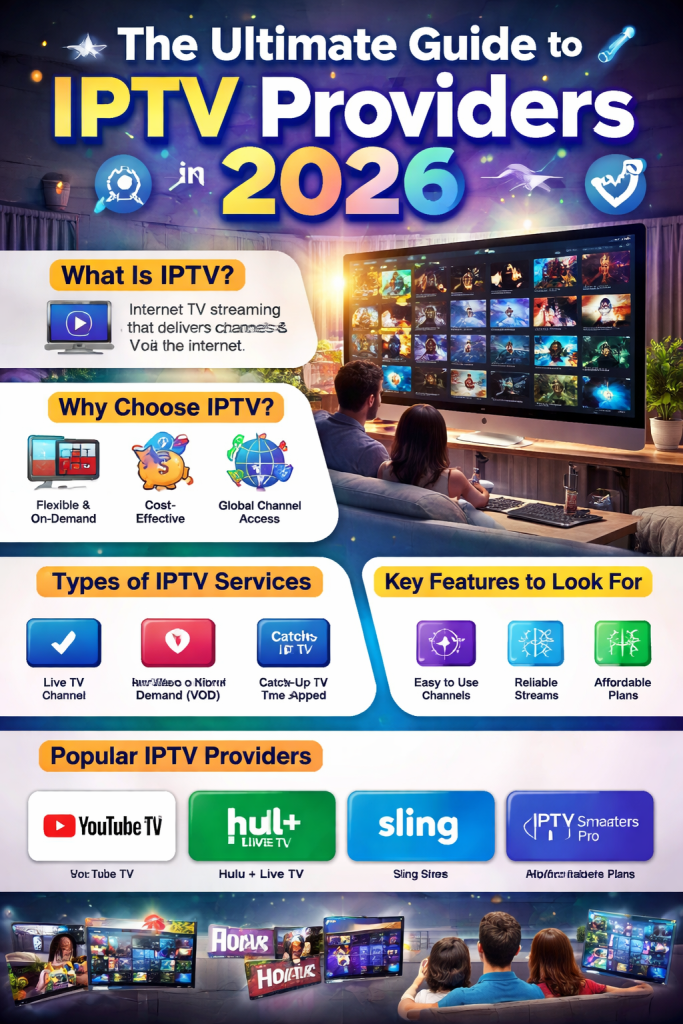
What Is IPTV?
IPTV stands for Internet Protocol Television. Instead of using satellite signals or cable lines, IPTV delivers television content through the internet.
Think of it like Netflix — but often with live TV channels included.
How IPTV Works
Traditional TV sends signals through cables or satellites. IPTV sends data packets through your internet connection. When you click a channel, the content streams directly to your device.
It’s like ordering food delivery instead of going to a buffet. You get exactly what you want, when you want it.
IPTV vs Traditional Cable & Satellite
Cable TV:
- Fixed channel packages
- Higher monthly costs
- Long-term contracts
IPTV:
- Flexible subscriptions
- On-demand content
- Works on multiple devices
Simple, right?
Why IPTV Providers Are So Popular
Why are millions switching to IPTV providers?
Flexibility and On-Demand Viewing
You don’t have to watch shows at a specific time anymore. Missed a game? Watch the replay. Want to binge a series at 2 AM? Go ahead.
IPTV puts you in control.
Cost-Effectiveness
Cable bills can feel like rent payments. IPTV subscriptions are usually much cheaper and don’t require installation fees.
Global Channel Access
Love international content? IPTV providers often offer channels from the US, UK, Canada, Europe, Asia, and more — all in one place.
Types of IPTV Services
Not all IPTV services are the same.
Live IPTV
Streams live television channels in real time — sports, news, entertainment.
Video on Demand (VOD)
Choose movies and series from a massive library. Watch whenever you want.
Time-Shifted Media
Allows you to replay shows that aired earlier.
Catch-Up TV
Missed last night’s episode? Catch-up features let you rewind and watch recent broadcasts.
Key Features to Look for in IPTV Providers
Choosing blindly? Bad idea. Here’s what matters.
Channel Variety
More isn’t always better. Make sure the provider offers the channels you actually watch.
Streaming Quality (HD, 4K, 8K)
Nobody likes blurry screens. Look for HD or 4K support.
Device Compatibility
Good IPTV providers work on:
- Smart TVs
- Firestick
- Android devices
- iOS devices
- PC and Mac
EPG (Electronic Program Guide)
An organized TV guide makes navigation easy. Without it? It’s chaos.
Customer Support
Things break. Servers go down. Reliable support matters.
Best Legal IPTV Providers
If you prefer licensed and legitimate services, here are some top options:
- YouTube TV – Offers live TV with cloud DVR.
- Hulu + Live TV – Combines live channels with Hulu’s streaming library.
- Sling TV – Budget-friendly and customizable packages.
- IPTV Smarters Pro – A popular IPTV player platform (requires service subscription).
These services operate legally and provide secure streaming experiences.
IPTV Devices You Can Use
One of IPTV’s biggest strengths? Versatility.
Smart TVs
Many modern Smart TVs support IPTV apps directly.
Amazon Firestick
Affordable and powerful. A favorite among IPTV users.
Android TV Boxes
Great for customization and performance.
Smartphones & Tablets
Watch on the go. All you need is internet.
How to Choose the Right IPTV Provider
Feeling overwhelmed? Follow this checklist.
Identify Your Viewing Needs
Sports? Movies? International channels? Know what you want first.
Check Reviews and Reputation
Research user feedback. If everyone complains about buffering, that’s a red flag.
Test with Free Trials
Many IPTV providers offer 24-hour or 48-hour trials.
Compare Pricing Plans
Don’t just pick the cheapest. Compare features vs cost.
Legal and Safety Considerations
This part is important.
Is IPTV Legal?
IPTV itself is legal technology. However, some providers stream copyrighted content without licenses.
Always choose legitimate providers to avoid legal trouble.
Risks of Unverified IPTV Services
- Sudden shutdowns
- Poor streaming quality
- Security risks
- No customer support
Cheap isn’t always smart.
Using VPNs – Do You Need One?
Some users use VPNs for privacy. It adds a layer of protection but isn’t mandatory for legal IPTV services.
Common IPTV Problems and Solutions
Even the best IPTV providers can have issues.
Buffering Issues
Usually caused by slow internet. Aim for at least 25 Mbps for HD streaming.
Channel Freezing
Often server-related. Restarting the app can help.
Login Errors
Double-check credentials or contact support.
The Future of IPTV Providers
Where is IPTV heading?
AI-Powered Recommendations
Smarter suggestions based on your viewing habits.
8K Streaming
Ultra-high definition is becoming more common.
Cloud-Based DVR Expansion
More storage. More convenience.
IPTV isn’t slowing down. It’s evolving.
IPTV vs Streaming Platforms
Let’s compare.
IPTV vs Netflix
- Netflix focuses mainly on on-demand content.
- IPTV includes live TV channels plus VOD.
IPTV vs Cable TV
Cable feels outdated. IPTV is flexible and internet-driven.
IPTV for Sports Fans
If you’re a sports addict, IPTV can be a game changer.
Live matches, international leagues, PPV events — all accessible without expensive cable packages.
Just make sure the provider has stable servers during peak times.
IPTV for International Viewers
Living abroad? IPTV helps you stay connected to your home country’s channels.
News. Drama. Cultural shows. All at your fingertips.
IPTV Subscription Pricing Explained
Most IPTV providers offer:
- Monthly plans
- Quarterly plans
- Annual plans (discounted)
Prices vary depending on features, channels, and streaming quality.
If a deal sounds too good to be true, it probably is.
Final Thoughts on IPTV Providers
IPTV providers are transforming home entertainment. They’re flexible, affordable, and packed with features.
But here’s the key: choose wisely.
Focus on reliability, legality, streaming quality, and support. Don’t chase the cheapest option. Chase the smartest one.
Cut the cord — but do it right.
FAQs About IPTV Providers
1. Do IPTV providers require a contract?
Most do not. Many offer month-to-month subscriptions without long-term commitments.
2. How fast should my internet be for IPTV?
For HD streaming, at least 10–25 Mbps is recommended. For 4K, 25–50 Mbps works best.
3. Can I use IPTV on multiple devices?
Yes, but it depends on your subscription plan. Some allow multiple connections.
4. Is free IPTV safe?
Free services often lack licensing and security. Use caution.
5. What happens if my IPTV provider shuts down?
Unverified providers can disappear overnight. That’s why choosing reputable services matters.